

Every Business Day Counts: Rethinking Trademark Watch in Mexico with AI
Every business day in Mexico, a new chapter begins for hundreds of trademark applications.
For applicants, publication is an exciting milestone. It means their trademark has entered the public domain and is one step closer to registration. For trademark attorneys, IP professionals, and brand owners, however, publication marks the beginning of a different responsibility-carefully reviewing newly published applications to identify trademarks that could conflict with the rights they already protect.
Unlike jurisdictions where trademark journals are published weekly or at longer intervals, Mexico's daily trademark publication cycle means that monitoring trademarks is not a task reserved for one day of the week. It is an ongoing process. Every working day presents new applications, new brands, and new possibilities for conflict. Missing a single publication could mean overlooking a trademark that may later become a costly legal or commercial challenge.
This daily rhythm has transformed trademark watching from a routine administrative activity into an essential part of brand protection.
For many years, trademark watch relied heavily on manual review and exact-match searches. Professionals carefully examined trademark publications, looking for identical or nearly identical names that might affect their clients' rights. While this approach worked when filing volumes were lower and trademarks were relatively straightforward, today's trademark landscape is far more complex.
Modern brands are designed to stand out. Businesses increasingly use creative spellings, distinctive logos, stylized lettering, graphic elements, and unique combinations of words and images. A trademark does not need to be identical to create confusion in the marketplace. It may sound similar, convey the same commercial impression, or use a visually comparable logo while appearing completely different at first glance.
These are precisely the types of similarities that traditional monitoring methods can struggle to identify.
Now imagine repeating this process every business day.
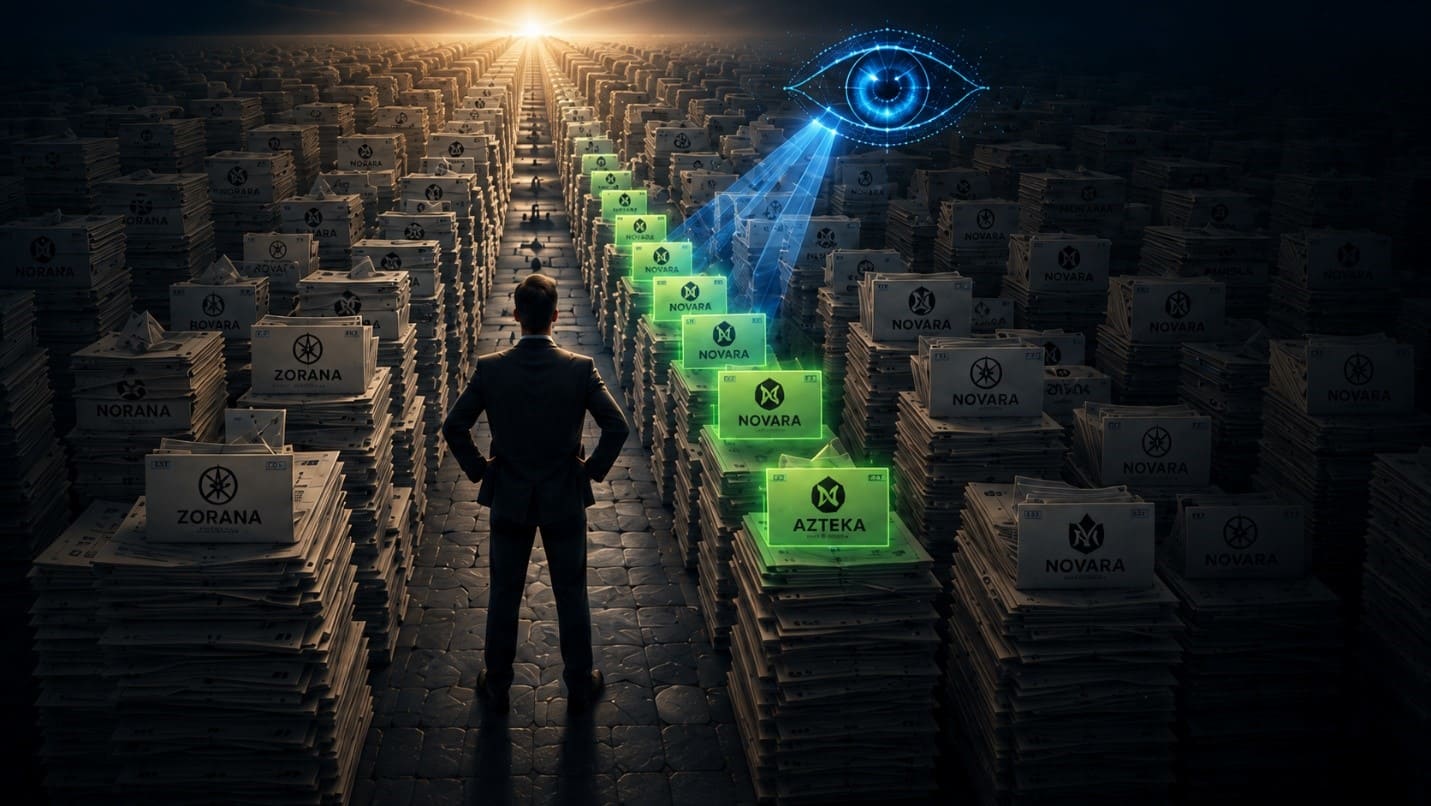
As new trademark applications continue to be published, professionals must balance speed with accuracy. Reviewing every publication manually consumes valuable time, yet relying only on exact keyword searches increases the possibility that relevant similarities remain hidden. The challenge is no longer accessing trademark information-it is identifying which applications truly deserve attention.
This is where artificial intelligence is beginning to reshape trademark watch.
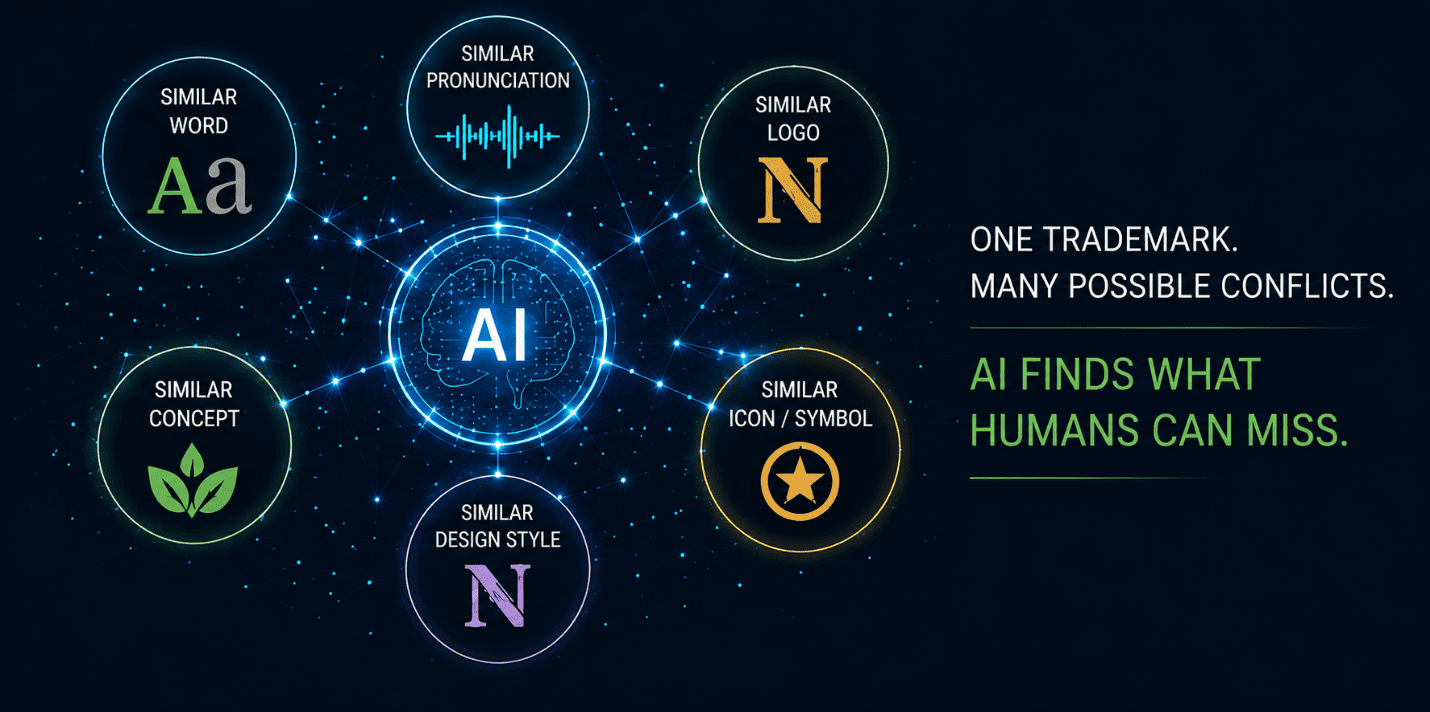
Rather than acting as a replacement for trademark professionals, AI serves as an intelligent assistant capable of reviewing large volumes of trademark data in a fraction of the time required for manual analysis. Instead of limiting searches to exact text matches, AI can evaluate trademarks from multiple perspectives simultaneously.
It can identify phonetic similarities between words that sound alike despite different spellings. It can recognize conceptual similarities where two trademarks communicate a similar commercial idea. It can compare visual characteristics of logos, including shapes, layouts, symbols, and design elements that may not be immediately obvious during manual review. By examining trademarks beyond literal text, AI helps surface applications that deserve closer legal analysis.
The result is not simply faster trademark watching-it is smarter trademark watching.
This is the principle behind IOLITE, an AI-powered Trademark Watch platform developed to help intellectual property professionals navigate today's growing trademark landscape with greater confidence.
Instead of asking professionals to manually review every application published each day, IOLITE intelligently filters and analyzes trademark data to highlight applications that may present meaningful similarities. The platform combines traditional trademark search principles with artificial intelligence to evaluate textual, phonetic, conceptual, and logo similarities within a single workflow.
This allows attorneys and brand owners to spend less time searching through large volumes of publications and more time assessing genuine legal risks, advising clients, and making informed decisions.
Equally important, AI does not replace professional judgment.
Trademark similarity remains a legal assessment that depends on numerous factors, including the goods and services involved, the distinctiveness of the earlier mark, the likelihood of confusion, and jurisdiction-specific legal principles. Artificial intelligence cannot determine whether infringement exists, nor should it attempt to replace the expertise of trademark professionals.
Its value lies elsewhere.
AI reduces the noise. It identifies patterns, prioritizes potentially relevant applications, and presents professionals with better information, allowing them to focus their expertise where it matters most.
As trademark filings continue to increase across industries, this partnership between technology and legal expertise is becoming increasingly important. Daily publication cycles, such as those followed in Mexico, reinforce the need for monitoring solutions that are both efficient and intelligent. The volume of information will continue to grow, but the time available to review each publication will not.
The future of trademark watch is therefore not about replacing people with technology. It is about equipping professionals with tools that enable them to make better decisions, respond more quickly, and protect brands more effectively.
Every trademark published today represents both an opportunity and a responsibility. For one business, it is the beginning of a new brand. For another, it may be the first indication of a potential conflict.
Recognizing that distinction has always been the purpose of trademark watch.
Artificial intelligence simply makes that responsibility more manageable.
In a jurisdiction where new trademark applications become available for review every business day, success is no longer measured by how many publications can be read manually. It is measured by how effectively professionals can identify the few applications that truly matter.
Because in trademark protection, seeing every application is important.
Seeing the right ones is what makes the difference.
🔗 Click here to learn more about IOLITE Trademark Watch Software